Social infrastructure is the hidden superpower of cities. It’s the network of schools, libraries, hospitals, parks, and community spaces that strengthens social identity and fuels the economy.
Historically, infrastructure has been viewed solely as an expense, but a new perspective is emerging that recognises social infrastructure as strategic investments with significant dividends. A report by the Property Council of Australia (PCA) sheds light on the true extent of its impact: a staggering $40 billion contribution to the Southeast Queensland economy, representing a significant 25% of all jobs in the region from health and education assets alone 1.
Despite this undeniable strength, the perception of social infrastructure as an “emerging asset class” hinders much-needed private sector investment, translating to communities lacking vital services and missed opportunities for economic and social growth.
Economic Development Queensland (EDQ) as the land development agency for the Queensland Government is changing the narrative. We recognise the immense potential of social infrastructure as a well-established economic driver and cornerstone of thriving communities. By collaborating and partnering with the private sector, we can unlock the full potential of social infrastructure and build a brighter future for Queensland.
Good social infrastructure = Good economics
Good social infrastructure provides economic returns through a domino effect that starts with improved social outcomes:
- Attractiveness & Liveability: Well-designed social infrastructure (parks, libraries, etc.) attracts residents with spending power, boosting housing demand and local businesses.
- Workforce Development: Early-childhood education, after-school programs, and recreation facilities cultivate a healthy, educated, and engaged population, leading to a more productive workforce.
- Stronger Communities: Social infrastructure creates spaces for connection and builds community spirit, resulting in lower crime rates, increased civic participation, and a more stable business environment.
- Positive Feedback Loop: Well-designed and maintained social infrastructure increases property values, attracts businesses, boosts commercial activity and tax revenue, which can be reinvested in further infrastructure and social programs.
- Improved Public Health: Healthcare facilities, sports fields, active transport options and green spaces promote healthy lifestyles, improve public health, and reduce healthcare costs.
In other words, investing in social infrastructure is an investment in the community’s overall well-being and economic future.
EDQ’s framework for social impact
EDQ works alongside government and the private sector to identify strategic areas for social infrastructure investment through Priority Development Areas (PDAs). These PDAs act as a roadmap, guiding the development of community-focussed infrastructure. We leverage our expertise in master planning, a collaborative process that creates a comprehensive vision for integrated precincts 2, involving diverse stakeholders, and ensuring infrastructure is strategically located and integrated, maximising its positive impact on the community.
Our framework incentivises private and community stakeholders to play a more active role in delivering social infrastructure through:
- Implementation Programs & Collaboration: We work closely with stakeholders to develop implementation plans that outline the type of social infrastructure programs required to build community capacity, considering community needs, potential funding sources and delivery methods, and a timeline for development.
- Implementation Charges and Offsets: EDQ facilitates community capacity building in the greenfield PDAs through the collection of implementation charges. Implementation charges are utilised to encourage and develop community development, ecological sustainability, employment and innovation programs in greenfield PDAs. Instead of making a financial contribution towards the implementation infrastructure charge, a developer may deliver approved implementation works and/or programs and receive an offset against the implementation charge.
- Infrastructure Charges & Offsets: We offer developers the opportunity to offset their infrastructure charges and allow them to contribute resources towards the delivery of social infrastructure projects within the PDA. This not only reduces the immediate financial burden for developers, but also facilitates the delivery of essential services and amenities for the community.
Partnerships that pay off
As highlighted in ‘CEDA – Why we need investment in social infrastructure’, Public-Private Partnerships (PPPs) are key to bridging the social infrastructure funding gap. While governments play a vital role, institutional investors offer a crucial source of long-term capital. Partnerships that prioritise shared value, not just profit, incentivise investment in the long-term success of social infrastructure 3.
This growing appetite for social infrastructure assets is already evident in capital markets. Newly seeded social infrastructure-focussed funds are estimated to represent ~$10.5 billion in managed assets, many of which include weighted average lease expiries of between 10 and 20 years. This stands in stark contrast to the shorter lease expiries typically observed in office, industrial, and retail properties (generally below 5 years), highlighting the potential profitability and long-term value proposition of social infrastructure investments 4.
Herston Quarter PDA
Infrastructure Australia’s 2019 Australian Infrastructure Audit uncovers the challenge of evolving health issues driving up the cost of traditional healthcare infrastructure and services. This trend threatens the sustainability of government funding and affordability, particularly for vulnerable populations 5.
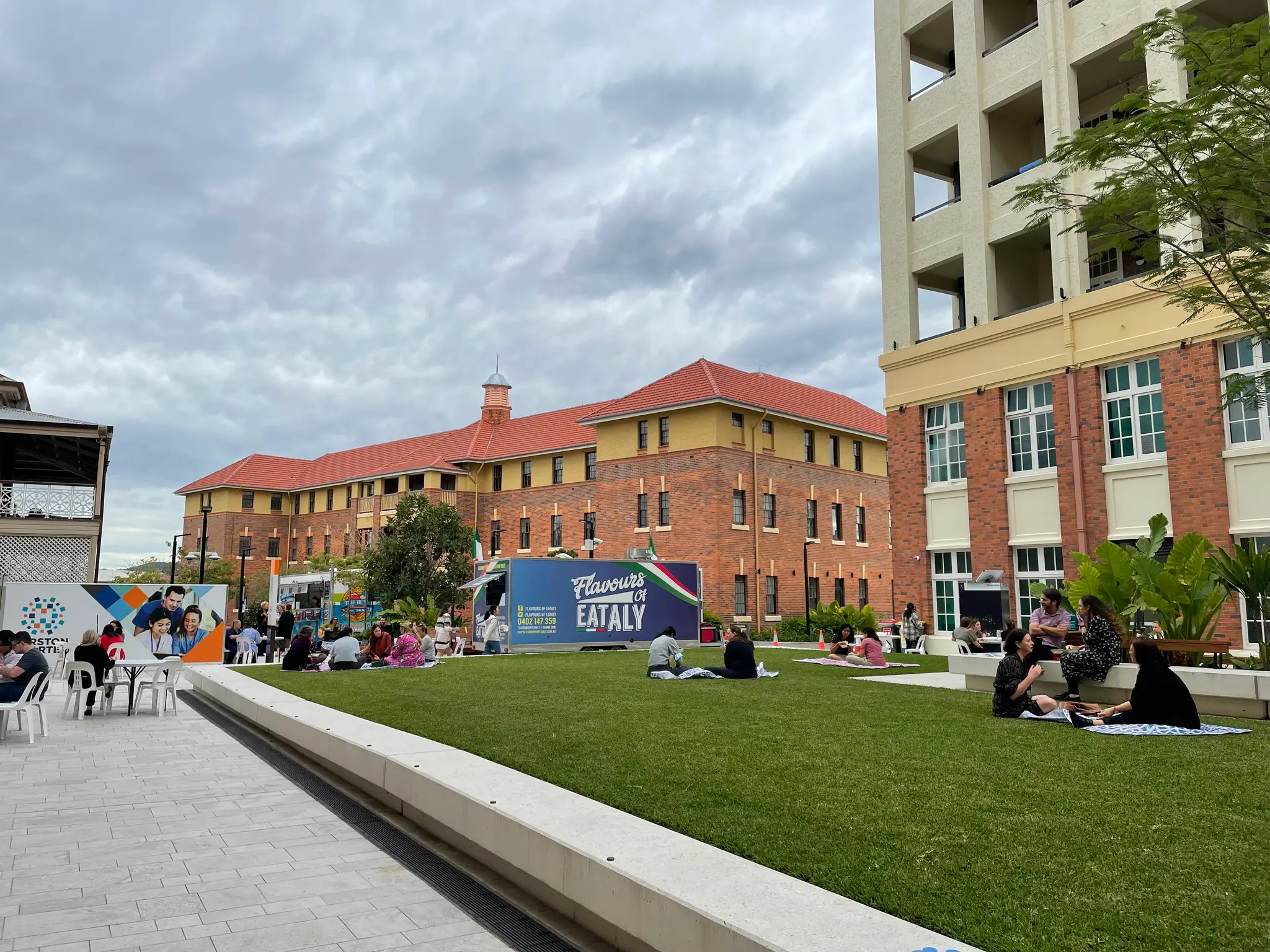
Herston Quarter leverages a PPP between EDQ, Metro North Hospital and Health Service, and Australian Unity. As highlighted in the Audit, health infrastructure precincts can capitalise on relationships between sectors. This cross-agency partnership leverages shared resources and expertise to strategically plan and co-locate services, sparking knowledge exchange and innovation. The result is high-impact social infrastructure.
Social infrastructure projects often involve constructing new facilities on greenfield sites, however Herston Quarter champions the concept of adaptive re-use, breathing new life into existing health heritage buildings. This not only maximises the value of existing social infrastructure assets but also preserves the precinct’s historical character.

Partnering with government through innovative delivery models creates significant economic and community benefit. The Herston Quarter Redevelopment is an excellent example of how innovative partnership approaches deliver positive outcomes for stakeholders and the broader community. We’ve pivoted our property portfolio towards social infrastructure, knowing there is a big future here that can deliver multiple outcomes simultaneously. It can meet community needs, create job opportunities, and provide attractive returns for our investors. 4
Ryan Banting
Australian Unity, Executive General Manager
Completed facilities are estimated to have already generated a substantial $650 million in annual community benefits and a $128 million economic contribution. This demonstrates that social infrastructure can be not only a social good but also a valuable and profitable investment for the private sector.
The Mill at Moreton Bay PDA
Access to education infrastructure is a challenge in remote and regional areas, and this reduced access delivers poorer educational and economic outcomes for communities 5. The Moreton Bay Region has historically faced significant challenges in education and employment. With a higher than national average dropout rate and participation rates that are half the national average, the region has been underserved in terms of higher education facilities. With no university in the region to meet the demand, 90% of students were facing up to three hours of travel daily to access university education 6.
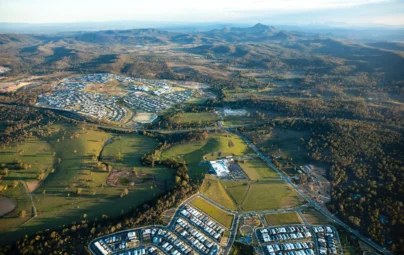
Moreton Bay Central (previously The Mill at Moreton Bay) was declared as a PDA to bridge the education gap and improve educational outcomes by establishing a University of the Sunshine Coast campus for up to 20,000 students. The City of Moreton Bay established Millovate to lead the development and activation of this precinct. It also encompasses comprehensive healthcare services, residential areas, and supporting infrastructure. The development prioritises community well-being by creating significant cultural, sporting, recreational, and environmental facilities that will be community-owned. This includes dedicated spaces like 12 hectares for sports and recreation and 110 hectares designated as conservation and koala habitat areas.
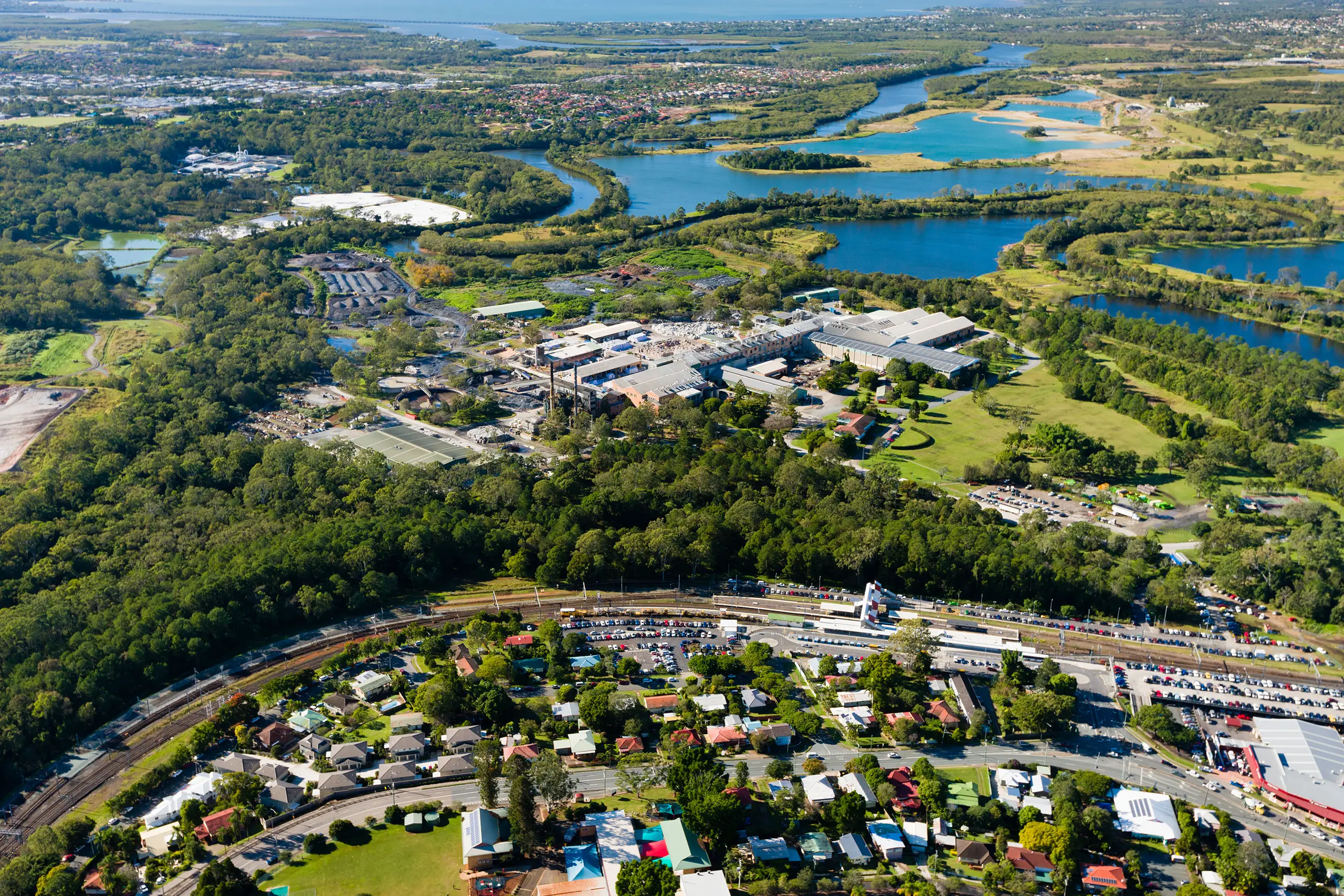

The PDA is projected to be a significant economic engine for the Greater Moreton Bay Region (GMBR). By 2036, it’s estimated to generate 6,000 ongoing jobs within the region, while driving $950 million in annual industry output within the GMBR. Furthermore, the project is expected to contribute a total of $1.5 billion to Australia’s GDP each year, with over half of this economic activity originating from the GMBR itself 6.
The future is social
Investing in social infrastructure isn’t just the right thing to do, it’s smart economics. By working together across public and private sectors to bridge the funding gap and leverage capital, we can ensure social infrastructure remains the invisible engine driving thriving communities and a prosperous future.
References
- Property Council of Australia (PCA) QLD Report “Social Infrastructure, Health and Education as an Asset Class within SEQ’
- Department of State Development and Infrastructure’s “Best Practice Guide for Social Infrastructure”
- CEDA – Opinion Article – “Why We Need Investment in Social Infrastructure”
- Property Council of Australia Media Release ‘The untapped potential of social infrastructure in South-East QLD’
- Infrastructure Australia’s Australian Infrastructure Audit 2019
- The Mill at Moreton Bay Development Scheme